Article
How to shop for veterinary imaging systems: key factors for choosing the right digital radiography solution
Choosing the best veterinary digital radiography system is one of the most important decisions a veterinary practice can make. Modern veterinary imaging systems directly influence diagnostic accuracy, workflow efficiency, staff safety, and client communication. As practices continue to rely more heavily on digital imaging, PACS, and integrated telemedicine, selecting the right imaging suite is essential to supporting high-quality care.
This article outlines the most important criteria to consider when evaluating veterinary digital radiography solutions, helping your practice select an imaging system that improves image quality, reduces retakes, enhances staff safety, and connects seamlessly to your broader workflow.
Dr. Emma Turner, MSc, DVM
May 7, 2026
Key takeaways
- The right imaging system is more than hardware – it’s a clinical foundation. Image quality and veterinary-specific design directly influence diagnostic confidence, consistency, and client communication.
- Connected workflows reduce friction and retakes. Seamless integration between imaging systems, software, PIMS, & teleconsultation helps teams move more efficiently from capture to diagnosis.
- Smarter imaging systems support radiation safety in daily practice. Consistent image quality and positioning guidance help limit retakes, reducing unnecessary exposure while preserving diagnostic clarity.
- Reliable system support ensures long-term performance. Ongoing service, updates, and access to experts keeps imaging systems dependable as practice needs evolve.
1. Image quality: the most critical component of any veterinary imaging system
Image quality is the foundation of diagnostic decision-making. The ability to consistently produce sharp, high-contrast images determines how confidently clinicians can diagnose and treat patients.
What practices should evaluate
- Veterinary-specific image processing: Systems purpose-built for animals, not adapted from human radiology
- High contrast and sharpness to reveal fine anatomical detail
- Consistency across users to minimize variability
- Positioning tools to guide image capture
- Reduced retake rates to limit patient stress and radiation exposure
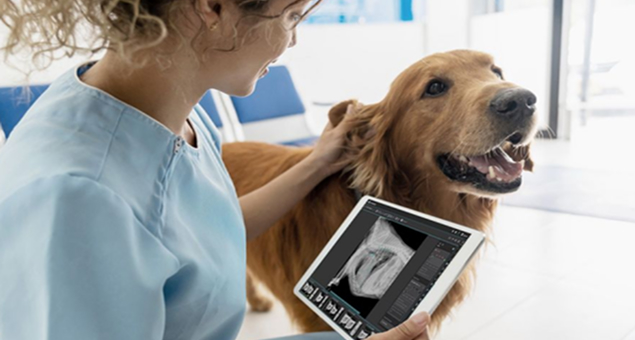
Clear images also support better client communication. When clients see the abnormality themselves, they more readily understand the severity of the condition and comply with recommended diagnostics or treatment.
IDEXX image quality technology
IDEXX imaging systems leverage ClearCapture Dx Image Processing Software and TRUVIEW ART technology, which are designed specifically for veterinary use. These technologies optimize sharpness, enhance contrast, and reduce noise across a wide range of species and clinical scenarios.
With IDEXX Web PACS Software, teams can also do the following:
- Compare images to normals using built-in reference libraries
- Use annotation tools for client discussions
- Access images from any device for streamlined review
This combination creates a strong foundation for diagnostic confidence.
2. Connected workflow: a seamless imaging journey from capture to diagnosis
Efficiency in radiology depends heavily on workflow. Practices benefit most from imaging systems that reduce manual steps, automate key functions, and connect directly to PACS and telemedicine. A disconnected workflow increases the risk of errors, slows down clinical processes, and adds unnecessary administrative burden.
Key workflow considerations
- Direct integration between the DR system, veterinary PACS, and the practice information management system (PIMS)
- Ability to submit telemedicine cases directly from imaging software
- Automation tools, including AI-assisted viewer enhancements
- Minimal clicks between imaging, storing, and sharing images
- Cloud access to imaging studies for remote collaboration
IDEXX workflow advantages
The IDEXX imaging suite creates a fully integrated workflow across the following:
- ImageVue DR50 Plus and ImageVue DR30 digital imaging systems
- IDEXX Web PACS Software
- Leading PIMS partners, including ezyVet, Neo, and Cornerstone software
- VetConnect PLUS
- IDEXX Telemedicine Consultants
Notable efficiency gains include these:
- 45% fewer clicks to access embedded telemedicine through IDEXX Web PACS Software1
- Up to 75% fewer clicks for ezyVet users submitting a radiology case1
These improvements shorten the time from x-ray to diagnosis and simplify the process for both veterinarians and technicians.
3. Radiation safety: protecting veterinary technicians and clinical teams
Radiation safety is a major concern in veterinary medicine, particularly for veterinary technicians, who capture the majority of images.2 Systems vary significantly in their radiation dose output, making it critical for practices to evaluate both exposure levels and tools that help reduce retakes.
Radiation safety evaluation criteria
- System-tested dose reduction compared to CR and DR alternatives
- Image-processing software that minimizes retake frequency
- Positioning support to reduce time under exposure
- Educational resources that support a culture of radiation safety
IDEXX radiation safety leadership
IDEXX systems are engineered to lower radiation exposure while improving imaging performance:
- ImageVue DR50 Plus system: 60% less radiation on average when compared to two of the leading competitor imaging systems3
- ImageVue DR30 Plus system: at least 25% lower dose than CR and earlier-generation DR4
Fewer retakes and faster capture mean technicians and patients are exposed to radiation for significantly shorter periods.
Additionally, IDEXX offers comprehensive radiation safety training tools, widely used across the industry, to support practices in building effective safety protocols.
4. Support and service: ensuring reliability for your veterinary imaging center
Imaging is at the core of modern diagnostics, which means system downtime or slow support response times can have meaningful impacts on patient care. Practices should evaluate the long-term service model alongside the imaging hardware.
What to look for
- 24/7 technical and clinical support
- Fast access to knowledgeable specialists
- Routine software and hardware updates
- On-site service availability
- Clear service level agreements (SLAs) and turnaround time guarantees
IDEXX support structure
With IDEXXCare Plus, practices receive continuous technical support, proactive updates, and reliable system performance monitoring.
This ensures that practices have clinical support whenever they need it, especially during urgent or complex cases.
Conclusion: how the right veterinary imaging system elevates diagnostic confidence and staff safety
The best veterinary imaging systems go beyond hardware. They streamline the imaging process, reduce radiation exposure, improve diagnostic clarity, and connect all elements of the diagnostic workflow, from image capture to specialist interpretation.
When evaluating veterinary digital radiography options, practices should consider the following:
- Image quality
- Workflow integration
- Radiation safety
- Reliability and support
Choosing an imaging suite that excels across these areas helps clinics improve efficiency, elevate their veterinary imaging center, and support the highest standard of patient care.
Explore IDEXX imaging solutions.
Learn how our low-dose systems and integrated workflows can support efficiency, safety, and diagnostic confidence.

Dr. Emma Turner, MSc, DVM
Emma Turner, DVM, MSc, is a veterinarian, published researcher, and medical education leader with >20 years of experience spanning clinical practice, academia, regulatory service, and industry. In her current role with IDEXX Diagnostic Imaging and Telemedicine Consultants, she leads an education program dedicated to enhancing diagnostic imaging skills and optimizing workflows for veterinary teams worldwide. A former practice owner and professor, she has contributed to provincial regulatory committees in British Columbia and Ontario.
References
- Data on file at IDEXX Laboratories, Inc. Westbrook, Maine USA: Based on IDEXX Web PACS embedded send compared to non-embedded telemedicine case submission.
- Data on file at IDEXX Laboratories, Inc. Westbrook, Maine USA: IDEXX/NAVTA Survey, March 2022; 975 respondents.
- Data on file at IDEXX Laboratories, Inc. Westbrook, Maine USA: Dose & Image Quality Comparison Study: Comparison of Indirect FPD versus Computed Radiography: Dose Reduction in Digital Radiography.
- Data on file at IDEXX Laboratories, Inc. Westbrook, Maine USA: Based upon comparison of IDEXX systems to comparable digital imaging systems currently available in the veterinary market.