Article
Seeing is understanding: how modern imaging improves client communication and agreement.
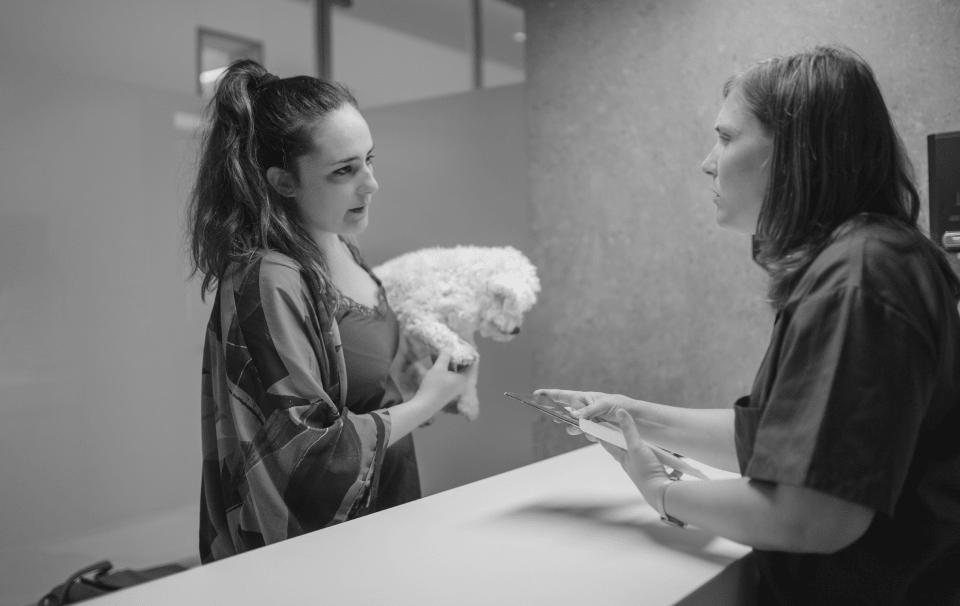
Discussing diagnostic recommendations with clients isn’t always straightforward, especially when recommended services come at an additional cost. These conversations require extra time to explain both the clinical need and the value of imaging. When clients don’t fully understand why imaging is being recommended or what the results may reveal, hesitation is more common, leading to delayed decisions or declined care.
Studies in veterinary medicine highlight that improved client compliance is strongly linked to clear communication of benefits, transparency around costs and outcomes, and shared decision-making between clinician and client.1,2
Modern diagnostic imaging, which combines advanced systems, software, and teleconsultation, helps to close the gap. This represents more than a clinical advantage. It’s a measurable opportunity to improve client trust, compliance, and practice performance.
Dr. Emma Turner, MSc, DVM
June 2, 2026
Key takeaways
- Modern diagnostic imaging helps clients better understand recommendations through clear, visual explanations, increasing trust and acceptance of care.
- Cloud-based imaging platforms enable faster image sharing, side-by-side comparisons, and more effective client conversations.
- Advanced imaging workflows make diagnostics faster, safer, and more cost-conscious, helping practices effectively communicate value and drive agreement.
- Integrated teleconsultation capabilities strengthen client confidence by providing expert interpretations and clear next-step recommendations.
- A connected imaging ecosystem improves communication, compliance, and follow-through on treatment recommendations.
Close the communication gap with visual clarity.
High-quality radiographs do more than support diagnosis; they make discussions more effective. Visual tools are most impactful when paired with benefit-focused explanations that clearly connect findings to what it means for pet health and next steps.
- High-contrast images make abnormalities easier for clients to recognize.
- Annotations and comparisons (e.g., normal vs. abnormal) clarify findings quickly.
- Chairside image sharing turns explanations into visual storytelling.
When clients can clearly see what’s happening, confidence increases along with likelihood to approve care.
Where connected imaging helps.
Cloud-based imaging platforms, like IDEXX Web PACS Software, enable instant access, side-by-side comparisons, and easy sharing from any device, supporting more effective consultations.
Reframing imaging as a fast, noninvasive way to narrow diagnoses and guide next steps.
A common barrier to acceptance is the perception that imaging is invasive or costly.
Modern workflows help reposition imaging as:
- Efficient: Faster acquisition and review speeds diagnosis.
- Cost-conscious: Greater diagnostic clarity helps focus on next steps and reduce downstream cost.
- Safe: Lower radiation doses support patient and staff safety.
Where connected imaging helps.
Modern veterinary imaging systems like the ImageVue DR30 and ImageVue DR50 Plus systems reduce retakes and streamline workflows, lowering costs while strengthening the case for timely diagnostics.
Looking for more guidance on how to discuss imaging with clients? Check out our article, “Helping Clients Say Yes to Imaging: How to Communicate Value and Address Concerns.”
Make specialist consultation part of the standard of care.
Clients are more likely to understand the value of specialist review when it is presented as part of the standard diagnostic process.
Positioning teleconsultation as a routine extension of care:
- Reinforces clinical thoroughness.
- Builds client trust.
- Increases willingness to proceed with recommendations.
This approach reinforces both specialist expertise and collaborative care, key drivers of client confidence and acceptance.2
Integrated workflows support efficient use of teleconsultation in practice:
- Submit cases directly from the imaging platform.
- Receive timely specialist interpretations.
- Share annotated findings with clients.
Where connected imaging helps.
Embedded telemedicine within imaging software simplifies case submission and accelerates access to expert insights, supporting faster, more confident clinical decisions. IDEXX Web PACS customers can submit cases for board-certified expert review directly from their IDEXX Web PACS platform, reducing clicks to specialist input by 45%.3
Looking for more guidance on how to position specialist input with clients? Check out our article, “How to Talk with Clients About Specialist Consultation and Why It Matters.”
Turn findings into confident next steps.
Even when diagnostics are accepted, treatment decisions can stall when findings are difficult to interpret or explain. Specialist reports help bridge this gap by:
- Presenting findings in a clear, easy-to-follow format.
- Highlighting the most clinically relevant conclusions.
- Providing specific recommendations and next steps.
- Offering added reassurance to clients through documented specialist review.
- Supporting discussions with clients through shareable reports and images.
Client follow-through improves when findings are paired with clear recommendations, defined next steps, and discussion of expected outcomes (prognosis).1
Where connected imaging helps.
Integrated reporting and sharing tools, like IDEXX Web PACS Software, ensure clients remain informed and engaged beyond the initial visit.
The bottom line for practice teams.
Advanced imaging technology directly impacts more than diagnostics. It strengthens the entire client experience.
Practices that consistently achieve higher acceptance rates focus on:
- Collaborative decision-making with clients.
- Clear, benefit-focused communication.
- Transparent discussion of cost and prognosis.
- Simple, structured diagnostic pathways.
- Expert-supported recommendations and next steps.
When clients understand and can visualize the “why,” informed decisions follow.
How IDEXX supports better imaging conversations.
IDEXX Diagnostic Imaging and IDEXX Telemedicine Consultants solutions help practices communicate more clearly, work more efficiently, and make confident care decisions.
- Improve client understanding: High-quality images, annotations, and side-by-side comparisons help teams explain findings in a clear, visual way.
- Simplify workflows: Integrated imaging, PACS, and telemedicine tools reduce manual steps and provide faster access to images, reports, and specialist support.
- Support confident decisions: Board-certified specialist consultations and structured reports provide clear findings and actionable next-step recommendations.
Together, these solutions help practices save time, strengthen client trust, and improve follow-through on care recommendations.
Explore IDEXX imaging solutions.
See how a fully integrated approach with IDEXX Diagnostic Imaging solutions can support clearer communication, greater efficiency, and improved compliance across your practice.

Dr. Emma Turner, MSc, DVM
Emma Turner, DVM, MSc, is a veterinarian, published researcher, and medical education leader with more than 20 years of experience spanning clinical practice, academia, regulatory service, and industry. In her current role with IDEXX Diagnostic Imaging and IDEXX Telemedicine Consultants, she leads an education program dedicated to enhancing diagnostic imaging skills and optimizing workflows for veterinary teams worldwide. A former practice owner and professor, she has contributed to provincial regulatory committees in British Columbia and Ontario.
References
- Coe JB, Adams CL, Bonnett BN. A focus group study of veterinarians’ and pet owners’ perceptions of veterinarian-client communication in companion animal practice. JAVMA. 2008;233(7):1072–1080. doi:10.2460/javma.233.7.1072
- Groves CNH, Coe JB, Sutherland KA, Bauman C, Grant LE. Clients prefer collaborative decision-making with veterinarians regardless of appointment type. JAVMA. 2024;263(1):1–11. doi:10.2460/javma.24.06.0421
- Data on file at IDEXX Laboratories, Inc. Westbrook, Maine USA: Based on IDEXX Web PACS embedded send compared to non-embedded telemedicine case submission.